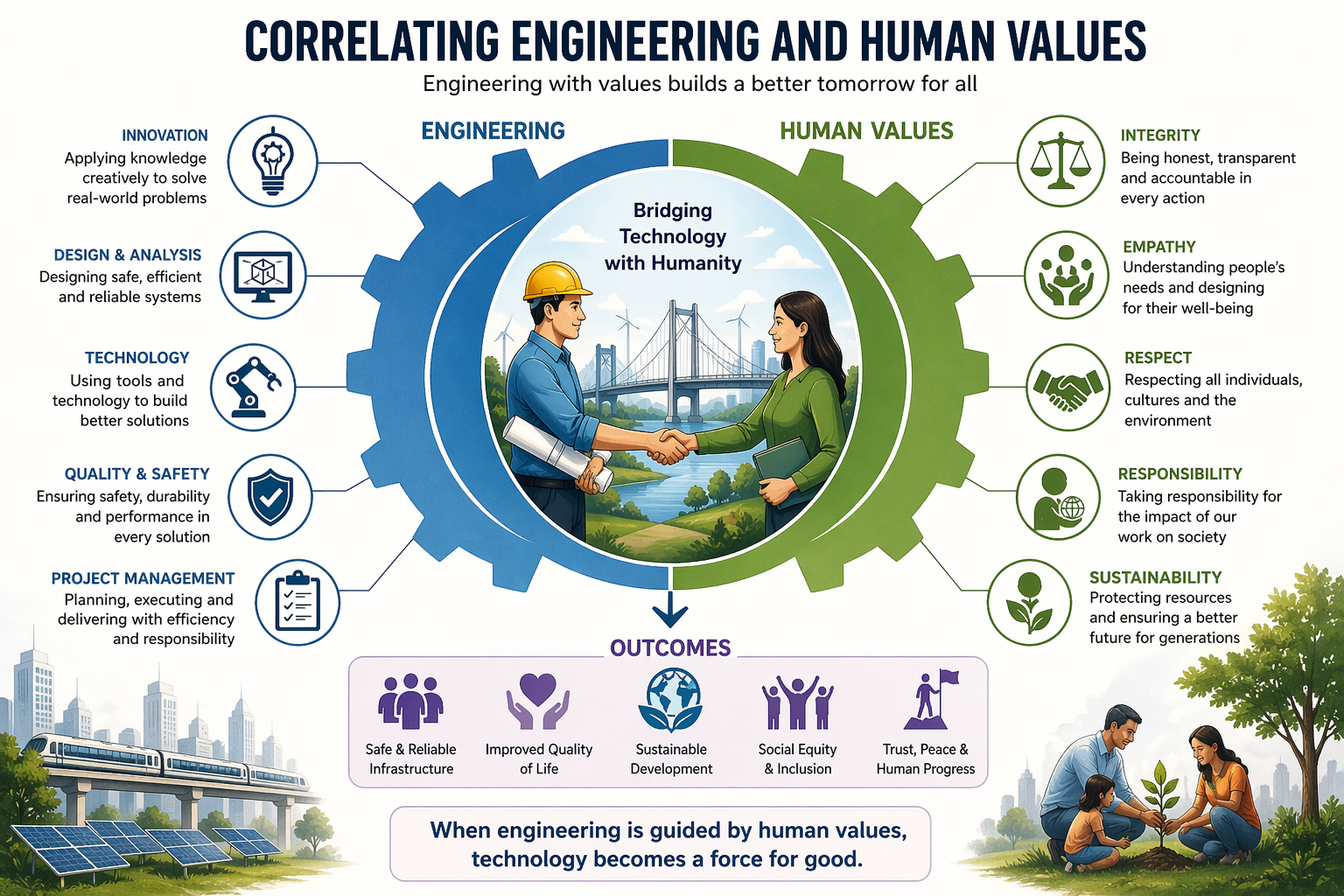
Correlating Engineering and Human Values
Engineering is not just about designing machines, systems, or technologies; it is fundamentally about improving human life. The integration of engineering with human values ensures that technological advancements serve society ethically, sustainably, and responsibly. Without human values, engineering risks become purely mechanical and potentially harmful.
Understanding Engineering and Human Values
Engineering involves the application of scientific and mathematical principles to solve real-world problems. On the other hand, human values include ethics, empathy, integrity, respect, responsibility, and concern for societal welfare. The correlation between the two lies in ensuring that engineering solutions align with the well-being of individuals and communities.
Importance of Human Values in Engineering
- Ethical Responsibility: Engineers must ensure safety, honesty, and fairness in their work. Faulty designs or unethical decisions can lead to disasters.
- Social Welfare: Engineering projects should benefit society as a whole, not just a specific group.
- Sustainability: Engineers must consider environmental impact and promote sustainable development.
- Accountability: Engineers are responsible for the consequences of their work.
Key Human Values in Engineering Practice
- Integrity: Being truthful in reporting data and results.
- Empathy: Understanding user needs, especially for vulnerable populations.
- Respect for Life: Ensuring safety and minimizing harm.
- Commitment to Quality: Delivering reliable and efficient solutions.
- Environmental Responsibility: Protecting natural resources.
Daily Life Examples of Correlation
- Software Engineering: Data privacy and cyber security reflect respect for user rights.
- Hardware Engineering: Create the backbone of modern technology; from smart phones, computer systems and medical devices to transportation and defense systems. These systems directly affect human life, making it crucial that engineers prioritize human well-being alongside technical performance.
- Green Technology: Renewable energy solutions demonstrate commitment to sustainability.
- Infrastructure Development: Bridges, roads, and buildings must be designed with safety and public welfare in mind.
- Medical Engineering: Devices such as life-support systems must prioritize patient safety and reliability.
Challenges in Integrating Human Values
- Conflict between cost and quality
- Pressure from organizations or stakeholders
- Lack of awareness or ethical training
- Rapid technological advancement without ethical consideration
Role of Education and Professional Ethics
Engineering education should include ethics, value-based decision-making, and social responsibility. Professional bodies such as IEEE and ASME have established codes of ethics to guide engineers in maintaining human values in practice.
Building a smarter world with human values…!!!