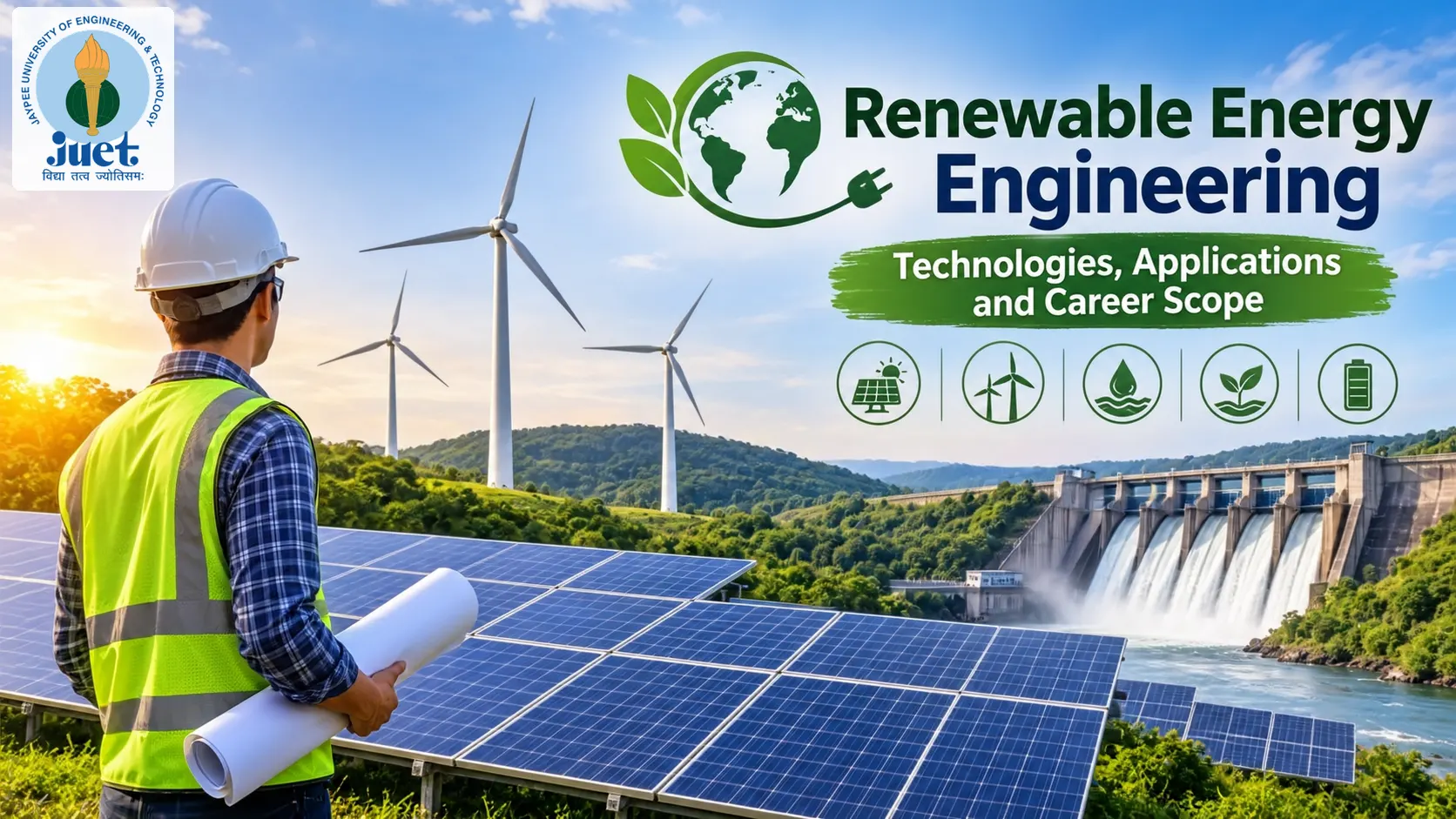
Sunlight falling on a rooftop panel, wind turning a turbine on a ridge, water rushing through a dam: each one is nature's motion being turned into electricity. Renewable energy engineering is the field that makes this happen reliably, safely and at a cost people can afford. For engineering students who want work that matters, it is one of the most promising areas to explore right now.
What Is Renewable Energy Engineering?
Renewable energy engineering is the branch of engineering that designs, builds and runs power systems based on sources that do not run out, such as sun, wind, water, plant matter and heat from the earth. Its aim is to deliver clean energy and sustainable power while making the best use of every unit produced.
The field draws on several core subjects: thermodynamics, fluid mechanics, electrical machines, power electronics and materials science. At its heart is energy conversion, which means changing sunlight, wind or flowing water into electricity, and doing it with as little loss as possible.
Key Renewable Energy Technologies
- Solar energy. Photovoltaic panels turn sunlight directly into electricity, while solar thermal systems use the sun's heat for water heating, drying and power generation.
- Wind energy. Turbines on land and offshore capture the movement of air. Engineers work on blade design, gearboxes, generators and grid connection.
- Hydropower. Dams, run-of-river plants and small hydro units use falling water to drive turbines, and pumped storage helps balance the grid.
- Bioenergy. Crop residue, animal waste and municipal waste can be turned into biogas, biofuels or heat.
- Geothermal energy. Heat from deep underground can run power plants and heating networks.
- Green hydrogen and storage. Batteries and hydrogen store power for the hours when the sun is down or the wind is calm.
Where Renewable Energy Systems Are Used
- Power grids. Large solar parks and wind farms now feed electricity into the national grid alongside conventional plants.
- Homes and buildings. Rooftop solar, solar water heaters and heat pumps cut electricity bills and improve energy efficiency.
- Agriculture. Solar pumps, cold storage and crop dryers help farmers who face unreliable power.
- Transport. Electric vehicles are only as clean as the power that charges them, so charging networks increasingly pair with solar.
- Industry. Factories use biomass boilers, solar process heat and waste heat recovery to lower fuel costs.
- Remote areas. Mini-grids and standalone solar units bring light and power to villages that the main grid does not reach.
Why Renewable Energy Engineering Matters
- Cleaner air and climate. Replacing coal and oil with clean energy cuts smoke, carbon emissions and the health problems that come with them.
- Energy security. A country that makes more of its own power depends less on imported fuel.
- Lower long-term costs. Once a solar or wind plant is built, the fuel is free, and costs have fallen steadily over the years.
- Jobs. Every plant needs engineers, technicians and managers, from design to maintenance.
- Smarter use of power. Good design is not only about producing more. It is also about wasting less.
Skills You Build
Studying renewable energy engineering trains you to model real systems, size a solar plant, estimate how much power a wind site can give and judge whether a project pays back. In the lab you work with panels, inverters, batteries and measuring instruments. You also learn tools such as MATLAB, AutoCAD and ANSYS, along with solar design and energy simulation software. Energy auditing is a useful extra skill that employers notice.
Renewable Energy Courses to Consider
Most students enter through a B.Tech in Mechanical, Electrical, Electronics or Chemical Engineering, where the basics of thermodynamics, electrical machines and power systems are taught. From there, the options widen:
- Electives or minor projects in solar, wind or energy systems during B.Tech
- M.Tech in Renewable Energy, Energy Systems, Power Systems or Thermal Engineering
- Short certificate renewable energy courses in solar PV design, energy auditing or battery systems
- Ph.D. and research roles for those drawn to new materials and storage
Course names and structures differ from one institution to another, so check the syllabus before you decide.
Renewable Energy Engineering Career Opportunities
Common job roles: Solar design engineer, wind energy engineer, energy auditor, power systems engineer, battery and storage engineer, project engineer, sustainability consultant, and research and development engineer.
Where you can work: Solar and wind developers, power utilities, equipment makers, EV and battery companies, engineering consultancies, large manufacturers with energy teams, and government agencies and public sector units.
Higher studies and government paths: An M.Tech in an energy-related field, GATE preparation for public sector roles and research, competitive exams for government engineering posts, and an MBA in energy or project management for a move into leadership.
The Future of Renewable Energy
The future of renewable energy looks busy for engineers. Cheaper batteries, green hydrogen, smart grids, floating solar plants, offshore wind and waste-to-energy projects are all creating new kinds of work. As more homes and factories switch to renewable energy systems, the need for people who can design, connect and maintain them will keep growing. Students who understand both the technology and the economics will stand out.
How to Get Started as a Student
- Build strong basics. Focus on thermodynamics, electrical circuits and fluid mechanics, since everything else rests on them.
- Make the most of labs. Handling real equipment teaches what a textbook cannot.
- Learn the software. Pick up simulation and design tools early.
- Try a small project. A solar water heater, a small wind model or a home energy audit gives you something real to show in interviews.
- Look for internships. Even a short stint at a solar installer or power plant helps.
- Plan for GATE early. If an M.Tech or public sector job interests you, begin in your third year.
Conclusion
Renewable energy engineering connects the power we need with the planet we want to keep. It rewards curiosity, practical skill and patience, and it offers a wide choice of careers in industry, research and public service. If you enjoy solving real problems and want your work to leave something better behind, this field is worth a serious look.
If you are ready to start, explore the engineering departments, labs and faculty at JUET Guna on the JUET website, and take the first step towards a career in sustainable power
FAQs
1. Is renewable energy engineering a good career choice?
Yes. Energy demand keeps rising, and the shift to cleaner sources is creating steady work in design, operations, research and consulting.
2. Which branch should I choose for a renewable energy engineering career?
Mechanical, Electrical, Electronics and Chemical Engineering are the common routes. Each one covers a different part of renewable energy systems, from turbines and heat to power electronics and fuels.
3. Do I need an M.Tech to work in this field?
Not always. Many B.Tech graduates start in design, installation, operations or sales engineering. An M.Tech helps if you want research, specialised design or teaching roles.
4. What are the main renewable energy technologies I should know?
Solar, wind, hydropower, bioenergy, geothermal and energy storage, including batteries and green hydrogen.
5. What does the future of renewable energy look like for engineers?
Strong growth is expected in storage, smart grids, offshore wind and green hydrogen, which means new roles for people who understand both energy conversion and system design.